The Anatomy of a $200M Misfire: Why High Budgets Can’t Buy Narrative Architecture

Let’s talk about the most expensive "oops" in modern tech history.
In early 2024, Sony launched a project called Concord. This wasn’t just a game; it was an eight-year labor of love, a massive financial bet, and a titan of a production. We’re talking a budget estimated between $200M and $400M. It had the graphics, the mechanics, and the backing of one of the world's most powerful entertainment brands.
This level of high-spend silence isn't exclusive to gaming; I saw the same Connection Deficit play out on the world’s most expensive stage last month.
And then, fourteen days after launch, Sony hit "delete."
They didn't just pull it from shelves; they refunded everyone and wiped the digital footprint. It wasn’t because the servers caught fire or the code was broken. It was because the game suffered from a terminal case of Connection Deficit.
As a brand architect, I look at Concord and I don’t see a failed game. I see a $200 million warning sign for every innovator, tech founder, and business owner on the planet: You can spend a fortune on the "look," but you cannot buy a soul.
The Problem: The High-Aesthetic Hollow
We live in a world where everyone is chasing the "Aesthetic." My influencer friends in the world know exactly what I mean—the perfect lighting, the curated grid, the polished finish. Sony did this at scale. The characters in Concord were 4-star. The trailers looked like they were directed by Oscar winners. On paper, it was "Platinum."
But here’s the forensic truth: Polished is boring if it isn't authentic.
Concord felt like it was designed by a committee using a "Diversity and Innovation" checklist. It was a brand built from the outside in. Every character, every line of dialogue, and every marketing beat felt like it had been scrubbed of any real human friction. It was "innovation" without the heart.

Introducing: The Dinner Table Test
This brings me to my favorite diagnostic tool: The Dinner Table Test.
I tell my clients all the time: If your brand’s story wouldn't hold up in a real-world, wine-fueled conversation at a dinner table, it isn't ready for the market.
Apply this to Concord. If you sat across from these characters at dinner, would you be leaning in to hear more? Or would you feel like you were being pitched to by a corporate representative? Concord failed because it was a monologue. It was Sony saying, "Look how much money we spent on this!" instead of inviting the audience into a dialogue.
In the gaming world—and honestly, in the "aesthie" small business world, too—the audience doesn't want to be sold to. They want to be seen. They want to feel like the person (or brand) behind the screen actually "gets" them. When you skip the Narrative Architecture and go straight to the $10 million ad spend, you aren't building a bridge; you’re building a billboard.
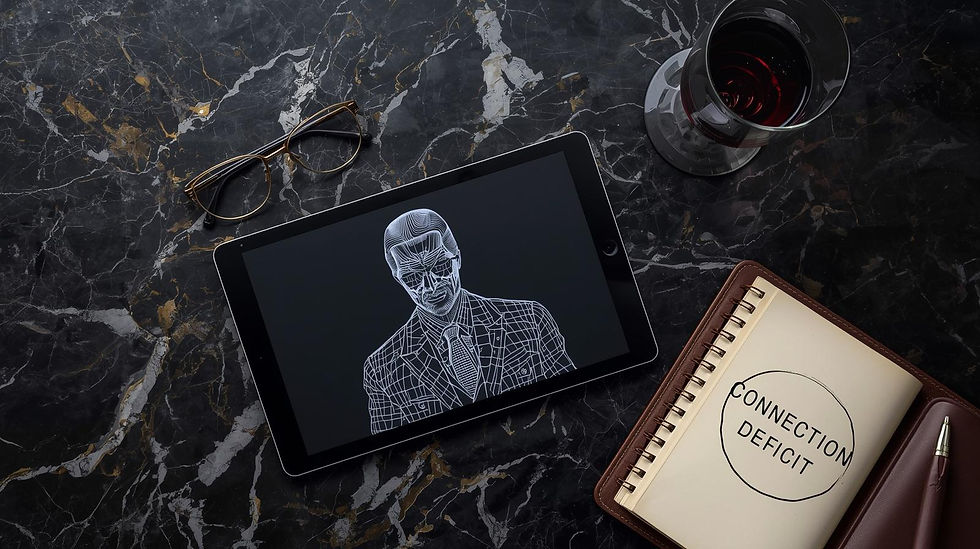
The Forensic Diagnosis: The Connection Deficit
So, how does a $200M project have a $0 resonance? It’s the Connection Deficit.
This happens when a brand’s "Narrative Endurance" is zero. There is no foundation. There is no "Why." There is just a "What." In Concord’s case, the "What" was a high-speed shooter. But there were already ten other "Whats" on the market that people actually liked.
Without Radical Authenticity, your brand is just noise. It doesn't matter if you're a gaming giant or a small business owner in San Pedro; if your narrative feels like a corporate brief instead of a human connection, the market will reject you. The market has an incredibly high "B.S. Detector" in 2026. If it isn't real, it isn't going to stick.
The Cure: Narrative Architecture
How do we prevent a $200M misfire? (Or even a $10,000 misfire for my small biz friends?)
You have to start with the "Forensic" heart of the brand. You have to build the Narrative Architecture before you pick the color palette.
Step 1: Stop chasing trends and start chasing resonance.
Step 2: Pass the Dinner Table Test.
Step 3: Bridge the Connection Deficit with Radical Authenticity.
I’m a "fixer" of these deficits. I look at brands—from the $10 million audits to the local small businesses—and I find the leaks. I find the places where the money is being spent but the connection isn't being made.
The Bottom Line
Sony’s Concord is a legacy lesson. It proves that in the age of AI and hyper-digital noise, the most valuable thing you can own is a human heart.
If you’re building something—whether it’s a game, a tech startup, or a new influencer brand—don’t start with the budget. Start with the story. Make sure your narrative is as restorative and immersive as the experience you’re promising.
Because at the end of the day, people don’t buy products. They buy how you make them feel. And you can’t fake that with a $200 million check.
What I'd Do Differently
If I were sitting in meetings for a $200M launch like this, I wouldn't start with the CGI budget. I’d start with the Narrative Architecture. Here is the forensic pivot to bridge that Connection Deficit:
Humanize the Prototype: Instead of "perfect" characters designed by a committee, I’d introduce Radical Authenticity. Give them flaws, a history that hurts, and a voice that passes the Dinner Table Test. If a character wouldn’t be interesting to talk to over a drink, they shouldn’t be in the game.
The "Slow-Burn" Community Build: In 2026, you don't "drop" a brand; you grow a movement. I’d pivot from massive "Billboard" marketing to a 30-Day Narrative Immersion. Show the process, show the heart, and let the audience co-author the world before the first dollar is spent on a trailer.
Audit for Resonance, Not Just Reach: I’d implement a monthly Resonance Check. We don't just look at how many people saw the ad; we look at the "Emotional ROI." Are they talking to us or just about us?
Ready to build a brand that passes the Dinner Table Test?


Comments